

‘It Was Great to Look at Scientific Achievements through the Eyes of a Journalist, not a Scientist’

HSE University in Nizhny recently hosted the 2nd Autumn Neuro-linguistic School ‘NeuroSciCom: Popularising Language and Brain Studies’ for scientists and students at the HSE Centre for Language and Brain Studies in Nizhny Novgorod. The school was held as part of the 'Human Brain Resilience: Neurocognitive Technologies for Adaptation, Learning, Development and Rehabilitation in a Changing Environment' Strategic Project of the Priority 2030 programme.
At the school’s opening ceremony, Igor Sokolov, the project coordinator, stressed that the project aims to create a centre for assistive technologies and augmented intelligence, and is the first unified infrastructure in Russia for research in the field of neurocognitive studies, as well as for generating, promoting and commercialising ideas in the field of neurocognitive technologies and research.
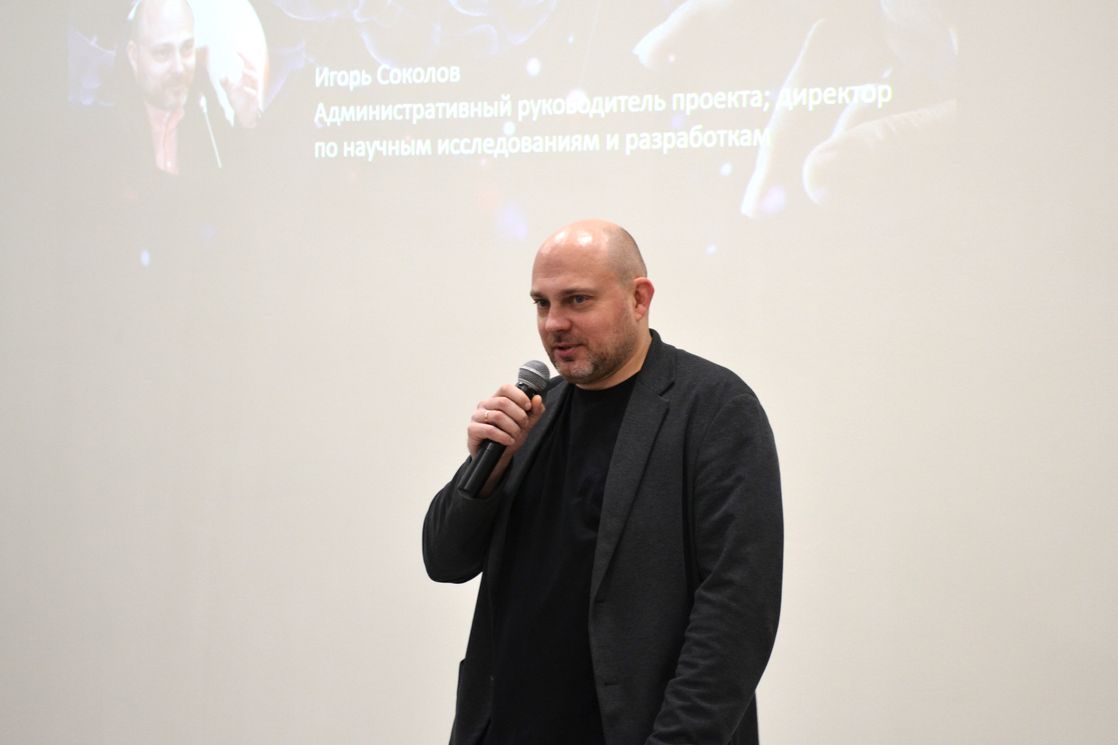
Strategic projects focus not merely on fundamental developments, but are more concerned with the creation of digital tools and products. For example, the goal of the HSE Centre for Language and Brain Studies in Nizhny Novgorod is to develop an application that helps to automatically diagnose symptoms of various psychiatric and neurological disorders, such as depression or schizophrenia. It is important for scientists who are engaged in the development of such products to convey the results of their activity to the wider public.
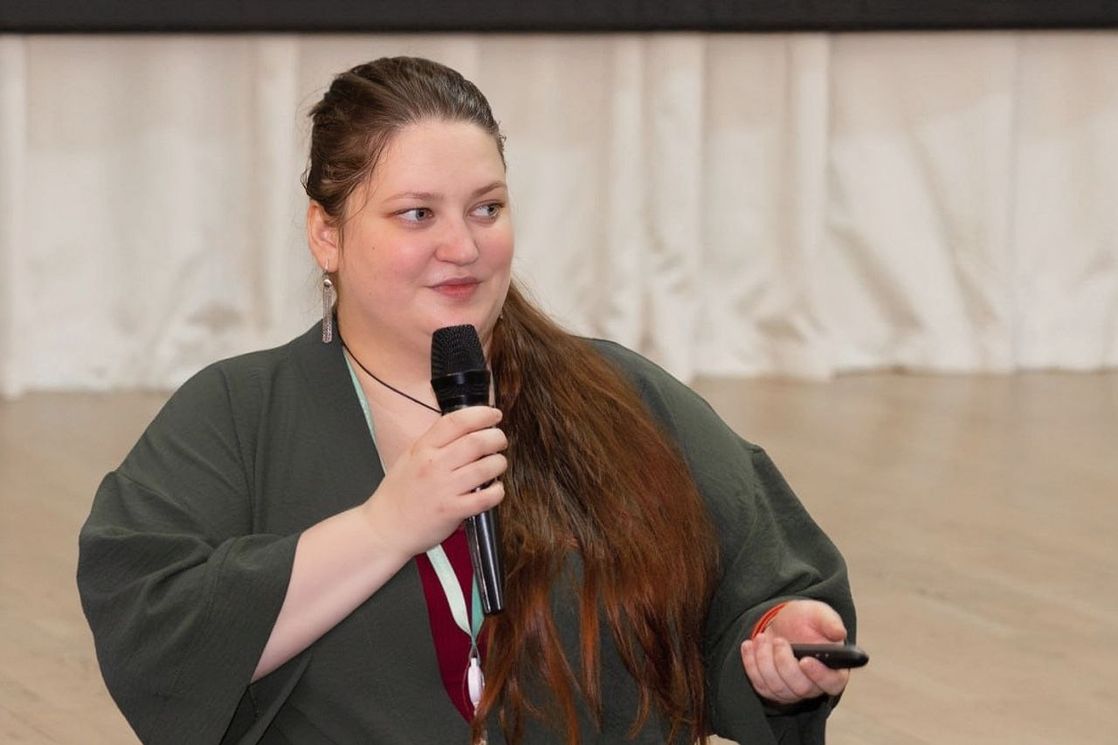
‘We have launched and organised a school that will be able to offer solutions to the very specific problem of communication between scientists and the general public, helping introduce various ways of popularising research, development and communication with a wider audience,’ explained Mariya Khudyakova, director of the Centre for Language and Brain Studies at the Faculty of Humanities (Nizhny Novgorod)
The school programme gives young scientists an opportunity to look at their research from the media’s point of view. Therefore, HSE University scientific communicators, as well as journalists and popularisers of science were invited as speakers: Grigory Tarasevich, founder and editor-in-chief of the popular scientific journal ‘Schrödinger's Cat’ and Daniil Kuznetsov, chief editor of the HSE science and education media brand IQ.HSE.
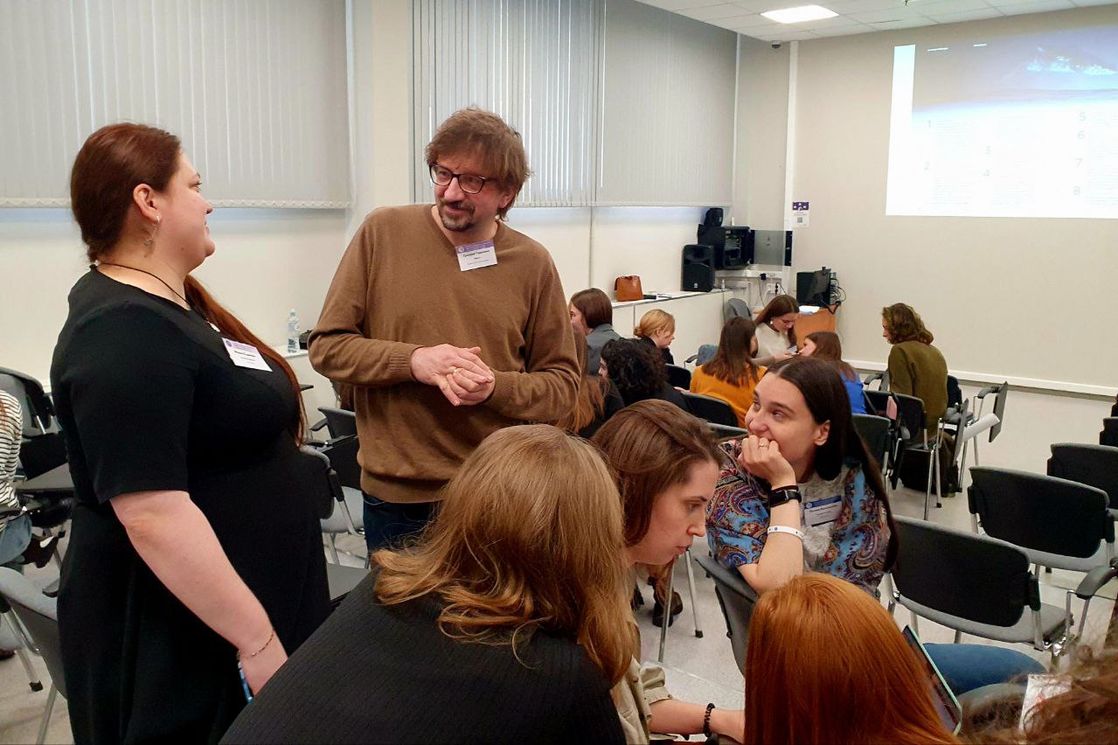
The school participants also practiced creating popular science texts on the topic of their research. The results of this work were presented by young researchers on the second day of the school during the master class 'How to speak about research in the field of neuroscience’.
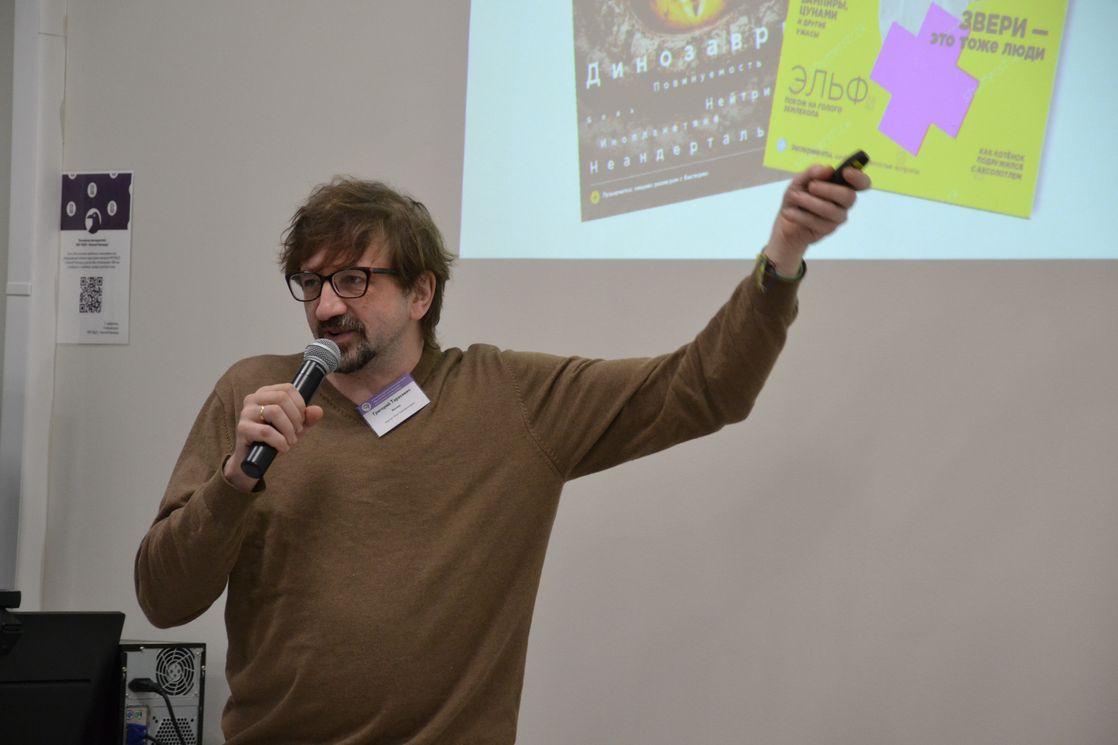
‘The audience for the neuro-school turned out to be absolutely wonderful - smart, and most importantly, motivated people. We discussed future projects, for example, articles in the ‘Schrödinger's Cat’ scientific journal and the neuro-linguistics workshop at the ‘Summer School’ (the summer school of the ‘Russian Reporter’). We also discussed how to popularise neuro-linguistics among high school students, for example, through involvement in scientific volunteering project. I believe that this school will help to popularise neuro-linguistics in Russia because, currently, it is much less appreciated than, let’s say, popular astrophysics or anthropology.’
During the lecture ‘Scientific news as the main tool for promoting research: features, structure, and the basic rules of writing’ by Daniil Kuznetsov, participants learned how and when it is best to start interacting with scientific communicators and brand media editors at their university so that their research can be effectively covered in the media. In addition, the students learnt how their large, detailed scientific article can be turned into a short news article, as well as why creative and catching headlines are vital.
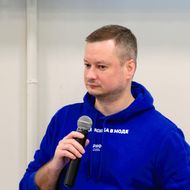
Daniil Kuznetsov
It was very important to me that our young scientists could put themselves in the place of journalists, walk in their shoes and look at the scientific process and the functioning of the media through their eyes. In most cases, this kind of experience removes various blocks and prejudices when working with the media in the future. Researchers understand why media specialists do certain things, which means they can help them create fascinating, but at the same time factually correct articles. The small exercise I proposed — to read a scientific paper from an unfamiliar field in half an hour and create a short piece about the research based on it — turned out to be a difficult task, but it allowed me to fully get into the daily routine work of a scientific journalist.
Grigory Tarasevich, Daniil Kuznetsov and researchers of the HSE Centre for Language and Brain Studies Nina Zdorova and Alina Minnigulova participated in the round table ‘Experiences of interaction between scientists and the media’. As a result of the discussion, most of the participants agreed that scientists and journalists need intermediaries – scientific communicators.
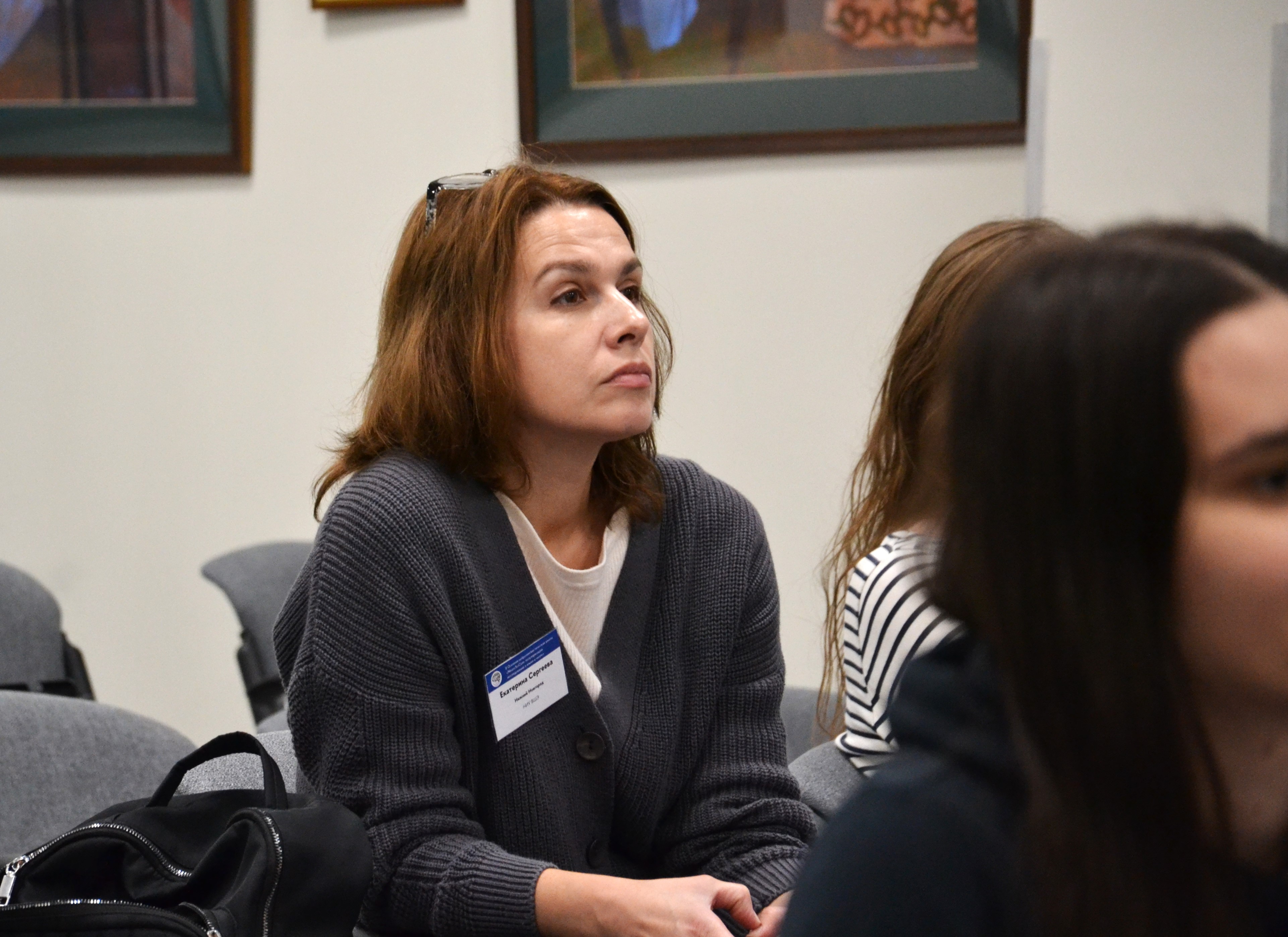
‘The open discussion aroused a lot of emotions,’ says Ekaterina Sergeeva, Advisor to the Director of the HSE University in Nizhny Novgorod. ‘Such events can make a great impression on the participants and allow young scientists to look at their research from a different angle.’ She supported Grigory Tarasevich's assumption that modern scientists need to discuss their scientific achievements with schoolchildren, explaining everything in the most accessible language. She adds that widespread use of such ‘scientific volunteering’ will raise the average level of education, which will positively affect the competence of scientific journalists and prepare young people for a conscious choice of science as their life's work.
A poster session presenting the results of 15 studies in the field of psycho- and neuro-linguistics was held during the school. The use of special video oculographic glasses that allow you to record eye movements when viewing the poster was an interactive part of the session’s programme.

Nina Zdorova
We recorded how people from three different professional fields viewed the posters: a linguist, a programmer, and a journalist. We then analysed the data and presented the results in the report ‘Eye movement in the evaluation of a scientific poster’. Of course, it was a pseudo-experiment, since there was only one person in the sample and one poster as the material. However, potentially it can be developed, and we plan to conduct a study on how viewers focus their attention when watching TV series with and without subtitles.
Kapitolina Untila, research assistant at the HSE Centre for Language and Brain Studies, agreed that it was useful to look at scientific achievements through the eyes of a journalist, not a scientist, because these are two completely different approaches. ‘During the School, we constantly returned to a lively discussion about the share of science in pop science and how to present it correctly. Before that, I had never thought about how difficult it was to maintain a balance between scientific accuracy and media attractiveness. In general, I had a lot of impressions, a lot of food for thought,’ she said.
During the school a screening of the film about the future through the eyes of HSE scientists 2052: See the Future took place. Liudmila Mezentseva, Head of the HSE Science Communication and Outreach Office, presented it to the participants. This film triumphed in the main Russian competition of scientific journalists, communicators and popularisers — the 9th all-Russia prize 'For Loyalty to Science' of the Ministry of Science and Higher Education of the Russian Federation, winning the 'Special Prize for the Popularisation of Russian Science' category. The film features 15 HSE experts who share their forecasts about changes in the economy and society, talking about foresight and scientific forecasting, research in neuroscience, the use of artificial intelligence, and the widespread introduction of digital technologies, including in the humanities and law.
See also:

Centre for Language and Brain Begins Cooperation with Academy of Sciences of Sakha Republic
HSE University's Centre for Language and Brain and the Academy of Sciences of the Republic of Sakha (Yakutia) have signed a partnership agreement, opening up new opportunities for research on the region's understudied languages and bilingualism. Thanks to modern methods, such as eye tracking and neuroimaging, scientists will be able to answer questions about how bilingualism works at the brain level.
How the Brain Responds to Prices: Scientists Discover Neural Marker for Price Perception
Russian scientists have discovered how the brain makes purchasing decisions. Using electroencephalography (EEG) and magnetoencephalography (MEG), researchers found that the brain responds almost instantly when a product's price deviates from expectations. This response engages brain regions involved in evaluating rewards and learning from past decisions. Thus, perceiving a product's value is not merely a conscious choice but also a function of automatic cognitive mechanisms. The results have been published in Frontiers in Human Neuroscience.
Electrical Brain Stimulation Helps Memorise New Words
A team of researchers at HSE University, in collaboration with scientists from Russian and foreign universities, has investigated the impact of electrical brain stimulation on learning new words. The experiment shows that direct current stimulation of language centres—Broca's and Wernicke's areas—can improve and speed up the memorisation of new words. The findings have been published in Neurobiology of Learning and Memory.
HSE Develops Its Own MLOps Platform
HSE researchers have developed an MLOps platform called SmartMLOps. It has been created for artificial intelligence researchers who wish to transform their invention into a fully-fledged service. In the future, the platform may host AI assistants to simplify educational processes, provide medical support, offer consultations, and solve a wide range of other tasks. Creators of AI technologies will be able to obtain a ready-to-use service within just a few hours. Utilising HSE’s supercomputer, the service can be launched in just a few clicks.
HSE Researchers Discover Simple and Reliable Way to Understand How People Perceive Taste
A team of scientists from the HSE Centre for Cognition & Decision Making has studied how food flavours affect brain activity, facial muscles, and emotions. Using near-infrared spectroscopy (fNIRS), they demonstrated that pleasant food activates brain areas associated with positive emotions, while neutral food stimulates regions linked to negative emotions and avoidance. This approach offers a simpler way to predict the market success of products and study eating disorders. The study was published in the journal Food Quality and Preference.
HSE Researchers Develop Python Library for Analysing Eye Movements
A research team at HSE University has developed EyeFeatures, a Python library for analysing and modelling eye movement data. This tool is designed to simplify the work of scientists and developers by enabling them to efficiently process complex data and create predictive models.
HSE Neurolinguists Create Russian Adaptation of Classic Verbal Memory Test
Researchers at the HSE Centre for Language and Brain and Psychiatric Hospital No. 1 Named after N.A. Alexeev have developed a Russian-language adaptation of the Rey Auditory Verbal Learning Test. This classic neuropsychological test evaluates various aspects of auditory verbal memory in adults and is widely used in both clinical diagnostics and research. The study findings have been published in The Clinical Neuropsychologist.
New Science: How Early-Career Researchers Reach New Heights
In the context of increasing global competition, countries arestriving to ensure technological sovereignty. Those who can ensure economic development and concentrate intangible assets and human capital are emerging as leaders. The growing demand for qualified staff leads to an increase in the role of universities and the demand for early-career scientists. The challenges and opportunities for prospective specialists in the scientific community were discussed at the ‘StratPro Platform’ strategic session at HSE University.
Researchers at HSE Centre for Language and Brain Reveal Key Factors Determining Language Recovery in Patients After Brain Tumour Resection
Alina Minnigulova and Maria Khudyakova at the HSE Centre for Language and Brain have presented the latest research findings on the linguistic and neural mechanisms of language impairments and their progression in patients following neurosurgery. The scientists shared insights gained from over five years of research on the dynamics of language impairment and recovery.
Neuroscientists Reveal Anna Karenina Principle in Brain's Response to Persuasion
A team of researchers at HSE University investigated the neural mechanisms involved in how the brain processes persuasive messages. Using functional MRI, the researchers recorded how the participants' brains reacted to expert arguments about the harmful health effects of sugar consumption. The findings revealed that all unpersuaded individuals' brains responded to the messages in a similar manner, whereas each persuaded individual produced a unique neural response. This suggests that successful persuasive messages influence opinions in a highly individual manner, appearing to find a unique key to each person's brain. The study findings have been published in PNAS.