


'When I Do My Work Well, It Benefits People with Mental Disabilities and Their Families'
After exploring several research fields, Maxim Gurin realised that he wanted to study sociology while specifically focusing on how his research could benefit the people at the centre of it. In this interview with the HSE Young Scientists project, he shares his passion for hip-hop dancing, the magical appeal of the courtyard at the House on the Embankment, and his quest to uncover the memories of the Chelyuskinitsy during a trip along the Trans-Siberian Railway.

'At the Intersection of Mathematics, Biology, and Machine Learning, I Found My Place'
Aleksei Shmelev conducts research in genomics and uses machine learning to explore the history of human populations. In this interview with the HSE Young Scientists project, he discusses the adaptive introgression of Tibetans and Denisovans and the use of IBD graphs to predict human population membership.

'Even among Geniuses, Luck Plays a Role in Winning a Nobel Prize'
Denis Bodrov studies particle physics and works at one of the four electron–positron colliders in the world. In this interview with the HSE Young Scientists project, he talks about his efforts to go beyond the Standard Model, discusses tau leptons, and shares his affection for Moscow.

‘My Goal Is to Shed Light on How Deaf Children Develop in Russia’
Having completed her PhD in the UK, Valeria Vinogradova dreams of applying her knowledge and experience to create an interdisciplinary centre for deafness studies in Russia. In an interview for the Young Scientists of HSE University project, she spoke about Russian Sign Language, her love of modern jazz, and much more.
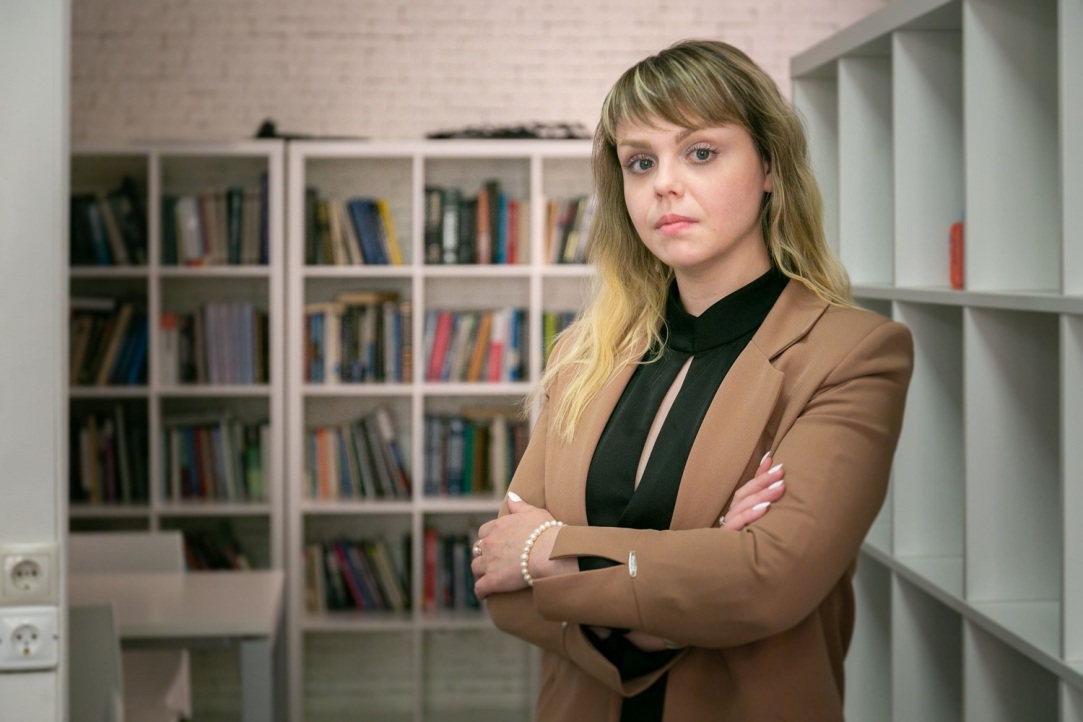
‘A Cat That Jumps from the Floor to a Shelf Doesn't Know Newton's Laws’
Anastasia Malashina defended her thesis on a topic related to cryptographic methods of information protection and is now engaged in applied projects in strategic analytics. In an interview with the Young Scientists of HSE University project, she discussed the difficulties she faced during her studies and explained what cryptography is and why large language models will not replace human intelligence.

'It Is Essential to Rely on Facts and to Be Consistent and Honest'
Ksenia Rozhkova studies the labour market, learns foreign languages to gain a deeper understanding of the world, and has a passion for theatre. In this interview with the HSE Young Scientists project, she discusses non-cognitive characteristics, the role theatre plays in her life, and common myths about pursuing a master's degree.

'Trust Is a Crucial Factor in the Development of a Digital Economy'
Eduard Tunkevichus enjoys working with data and learning new things, particularly innovative research and analysis methods. In this interview with the HSE Young Scientists project, he discusses the insights he gained while writing his dissertation, the difference between applied and academic research in marketing, and how AI helped him salvage his mandarin houseplant.

‘People Often Don’t Understand What’s Going On around Them—but We Can Explain’
Georgy Stalinov conducts field-based social research and has created a video podcast about unusual social phenomena based on fieldwork materials. In an interview with the HSE Young Scientists project, he spoke about hitchhiking with lorry drivers, why working as a taxi driver can be a bad idea, and whether poaching exists in Kamchatka.

‘The Fundamental Principle of Scientific Knowledge Is Honesty’
Daria Mazur has wanted to pursue science since she was 13 years old—ever since she discovered in the seventh grade that she was good at physics. In an interview for the HSE Young Scientists project, she spoke about her theoretical research on the electric double layer, speed reading, and the MGMT song ‘Little Dark Age.’

'Science Is Fluid and Evolving Quickly. You Have to Stay on Top of It'
Vladimir Dimidov specialises in positive psychology and investigates the issue of time perspective. In this interview with the HSE Young Scientists project, he discusses the importance of thinking about the future, strategies for preventing burnout, and the best places to visit on Lake Baikal.