

We Must Reconsider the Government’s Role in the Economy






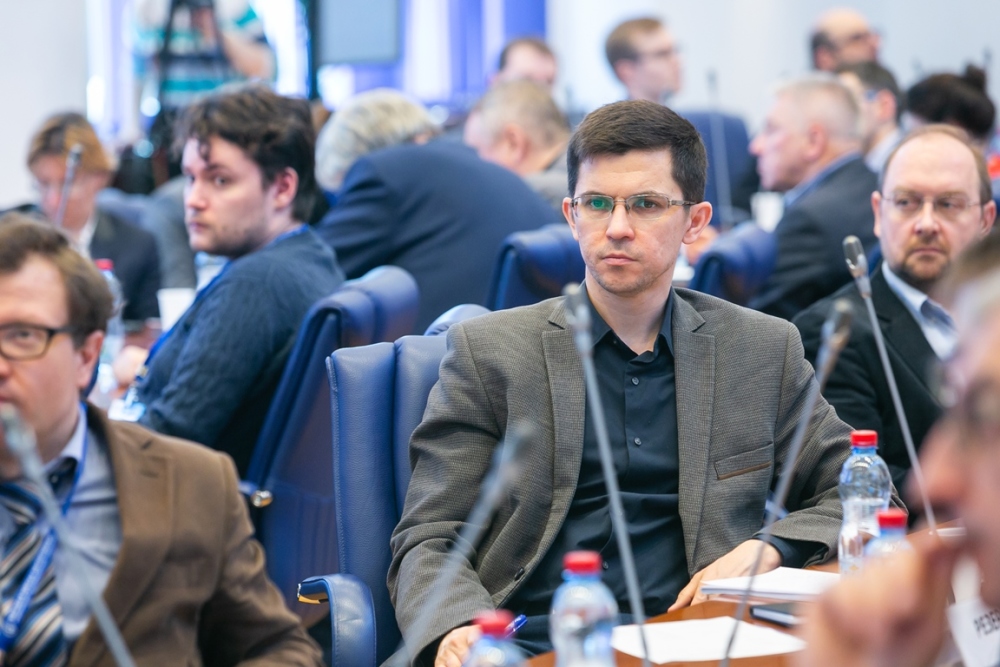


Slower GDP growth rates over the last several years were brought about by changes on international markets and the exhaustion of transformational bonuses due to the transition from a planned economy to a market economy, and this slowdown proves the necessity of looking for new solutions for stimulating the economy. The authors of the paper ‘Structural Changes in the Russian Economy and Structural Policy’ conducted a large-scale analysis on structural policy in Russia and around the world, as well as on possible ways for this policy to develop further. The first presentation of the paper took place as part of the plenary session called ‘Structural Policy in Russia: New Conditions and a Possible Agenda,’ which closed out HSE’s XIX April International Academic Conference.
‘We are not providing ready-made solutions or bothersome advice,’ Yuri Simachev, HSE’s Economic Policy Director, emphasised in his presentation. But now, the entire world is rethinking the government’s role in the economy, and the need for ‘smart policy’ is growing. Under these conditions, applying sensible measures of structural policy could not only significantly improve the investment climate, but also make a noticeable contribution towards economic growth.
The authors of the paper understand structural policy to be industrial policy in the broad sense – the actions of the government that are aimed at improving the business climate and improving economic activity structures in sectors that guarantee the best prospects for economic growth and the creation of social benefits. This is all in contrast to a lack of government intervention.
The paper analyses eight examples of when structural policy was applied in Russia on a larger scale. The authors note that a catch-up developmental policy was prevalent, a policy based on well-known technologies and approaches. The results ended up being fairly local and did not lead to robust growth. In order to carry out a structural policy, it is crucial to create an atmosphere conducive to the rapid distribution of technology, but there has not been significant progress in this area.
Another characteristic is the increased role of the government during times of crises, though as soon as economic growth resumes, the motivation to carry out structural policies declines considerably. Traditional growth factors were again relied upon heavily, but these are factors that involve significant risks when it comes to simulating activity and the results of this activity.
In addition, Yuri Simachev noted in his presentation that ‘absolutely no attention is paid, or it is paid exclusively in a demonstrative fashion’ to small- and medium-sized enterprises and high-tech companies. This leads to a situation in which all positive changes are disappearing at the micro-level. Temporary support measures become partially constant, and they bring about new and ineffective balance. Such significant difficulties are linked to insufficient administration. Russia has no culture of utilizing developments that already exist without trying to start fresh each time. Russia has no culture of transferring successful experiences immediately so that others can take advantage. Lastly, there is no culture for closing inefficient mechanisms. ‘We need to reform the system as a whole. The business climate has to change so it’s better aligned with the needs of growing companies, Simachev added.
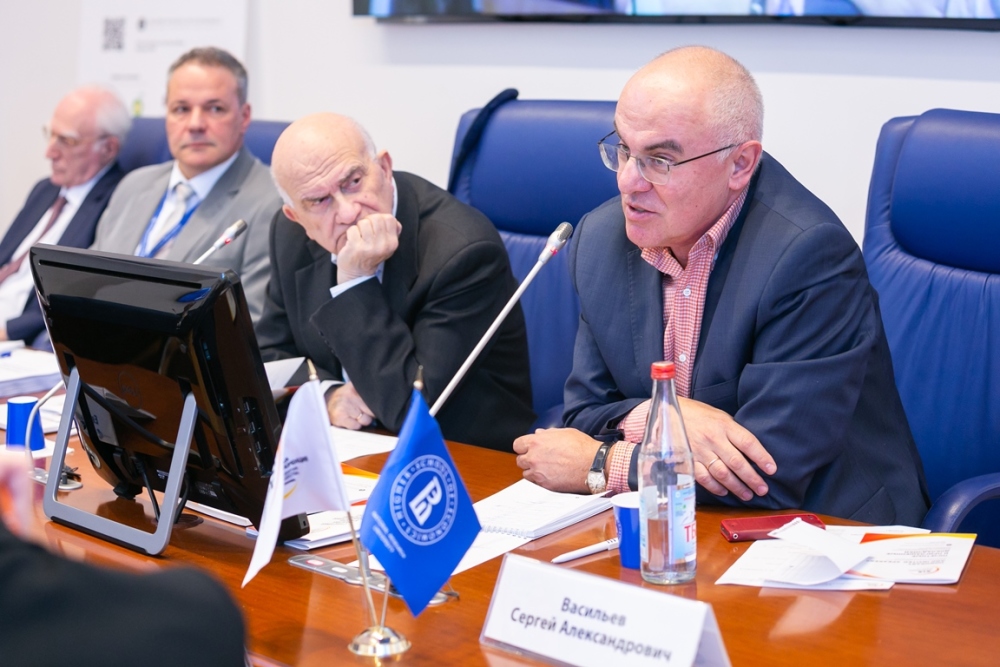
The authors’ conclusions sparked a lively discussion. VEB Deputy Chairman Sergey Vasiliev noted that the government could not be a source of financing. ‘For this there has to be a stock market, and a way of supporting it has to be found,’ he said. In addition, more attention must be paid to carrying out foresight assessments so as to avoid massive and senseless spending on ill-chosen areas, which is what happened in the electricity sector.
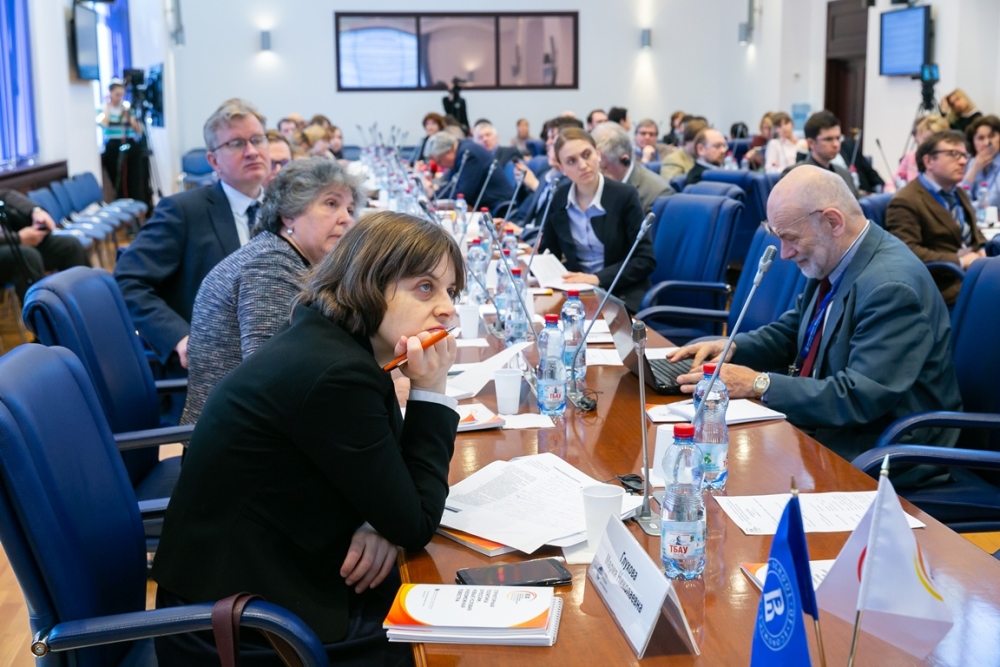
As for business, the main difficulty with development concerns the position of the regional authorities. ‘The regions, excluding those leading in GRP growth, are not very interested in an active economic policy,’ added Maria Glukhova, the Vice President of Russian Union of Industrialists and Entrepreneurs.
RAS Academician Victor Polterovich reminded attendees that we cannot rely solely on our own experience. ‘Practically all successful countries used a specific system of institutions, creating a Federal Development Agency that stands above the government. The finance ministry, central bank, and economic development ministry in all countries have different goals and are unable to agree,’ he said. In addition, Polterovich believes Russia needs to establish a national planning system, work systematically on borrowing technologies, and create an intermediary between fundamental science and business in the form of design bureaus and research centres. ‘Each governmental enterprise has to have a mission – develop the entire industry and not just increase the budget,’ he concluded.
Ekaterina Shapochka, who is a member of the Russian government’s Expert Council, said that ‘with the government’s share of the economy at 70%, we are still having a dialogue with ourselves.’ A policy on small-and medium-sized entrepreneurship has still not been formed, and a roadmap on supporting technological entrepreneurship has not been approved. ‘The structure of the economy cannot be changed if the government doesn’t take measures to bring small business up to average European norms and develop the innovations sector,’ added HSE Academic Supervisor Evgeny Yasin.
‘This work sums up the preliminary results of developments that have been underway for many years, and this must absolutely be continued,’ HSE First Vice Rector Lev Jakobson said, closing the presentation.
'Structural Changes in the Russian Economy and Structural Policy' (PDF)

See also:

HSE Researchers Compile Scientific Database for Studying Children’s Eating Habits
The database created at HSE University can serve as a foundation for studying children’s eating habits. This is outlined in the study ‘The Influence of Age, Gender, and Social-Role Factors on Children’s Compliance with Age-Based Nutritional Norms: An Experimental Study Using the Dish-I-Wish Web Application.’ The work has been carried out as part of the HSE Basic Research Programme and was presented at the XXVI April International Academic Conference named after Evgeny Yasin.
China Bets on Expanding Leading Universities, Postgraduate Education, and STEM Fields
At the XXVI April International Academic Conference named after Evgeny Yasin at HSE University, one of the distinguished speakers was Prof. Liguo Li of the School of Education at Tsinghua University. He spoke about changes in the structure of higher education in China in line with national strategic priorities, including a proposed 1.7–2-fold increase in the number of leading research universities.
Scholar Explains How States Can Build Governance in Era of Mega-Shifts
How can states maintain governability and stability in a world where established rules are rapidly losing their force? Prof. Ali Farazmand of Florida Atlantic University answered this question in a presentation delivered at the XXVI April International Academic Conference named after Evgeny Yasin. The scholar proposed examining the transformation of the global order through the lens of two ‘mega-shifts’—from the rise of global corporate capitalism to the emerging multipolarity of today—and demonstrated why this transition between eras requires fundamentally new approaches to governance.
Supercomputers as Superheroes: How High-Performance Computing Is Saving the World
Modern supercomputers can perform more than a trillion calculations per second. This immense capacity enables researchers to address problems that were previously intractable. At the XXVI April International Academic Conference, Ilias Kotsireas, a professor at Wilfrid Laurier University, spoke about the potential of high-performance computing in fields such as weather and climate modelling, astrophysics, and medicine.
A Time for Flexible Solutions: How China Trains In-Demand Specialists
Building an effective workforce training system requires not only appropriate institutions, but also well-developed intermediary organisations capable of translating policy into practice and connecting different groups of stakeholders, said Dr Po Yang, Professor at Peking University. She was an invited speaker at the XXVI April International Academic Conference named after Evgeny Yasin.
XXVI April International Academic Conference Kicks Off at HSE University
The conference programme covers five research topics: economics; human capital and society; instrumental methods and models; foresight research; and international research. Hundreds of scientists from around the world will take part in the conference.
Applications for Participation in XXVI April International Academic Conference Still Open
Applications can be submitted on the conference website until December 16, 2025. The programme has been developed around five research themes: Economics, Human Capital and Society, Instrumental Methods and Models, Foresight Research, and International Research. The heads of these areas have presented, in video format, the priority topics and sections for which they are expecting submissions.
Applications to Participate in April International Academic Conference Now Open
HSE University is now accepting proposals to present academic reports at the XXVI April International Academic Conference named after Evgeny Yasin. Applications can be submitted until December 16, 2025. The conference events will take place mainly on-site in Moscow from April 14 to 17, 2026.
24 Countries Represented at 25th Yasin International Academic Conference Held by HSE University
The Programme Committee of the 25th Yasin (April) International Academic Conference on Economic and Social Development has summed up the initial results. In 2025, 1,384 people from 24 countries and 29 Russian regions participated in the conference, with 335 of them delivering presentations.
Stuck in the Net: How Much Time Children Spend Online
On average, a schoolchild spends 48 hours a week on studies—equivalent to a six-day working week for an adult. This was highlighted by experts at the round table ‘Domains of Children’s Well-Being Evaluation for Human Potential and Evidence-Based Social Policy Development,’ held as part of the 25th Yasin (April) International Academic Conference.