

HSE Takes Part in Finals of the 5th International Olympiad on Financial Security

The final stage of the 5th International Olympiad on Financial Security took place at the Siberian Federal University in Krasnoyarsk from September 29 to October 3. The event brought together 600 students from schools and universities from 40 different countries. The Higher School of Economics was represented at all three levels of the Olympiad: competition, expert, and career guidance.
At the opening ceremony of the anniversary Olympiad, Russian Federation President Vladimir Putin greeted the participants in a video message. ‘It is gratifying that this competition has become part of the systematic, multifaceted work by the state and society to expand access to modern knowledge and unleash the creative potential and talents of the younger generation—children focused on professional success and creative work,’ the head of state noted. ‘Today we can confidently say that this project has succeeded. Its geography and representation grow each year, making it one of the key events of the large-scale International Financial Security Movement.’
Deputy Prime Minister Dmitry Chernyshenko and Director of Rosfinmonitoring Yuri Chikhanchin also delivered commemorative speeches.
The final week of the competition also served as a platform for interaction between financial security experts and representatives from the International Network Institute (INI), of which HSE University has been part since 2024. On one of the days, Dmitry Chernyshenko, who heads the Presidium of the International Financial Security Movement, and Yuri Chikhanchin met with the research and teaching staff of INI members. During this meeting and other events during the final week, participants discussed the priority areas for development of the International Financial Security Movement and the activities of ISI members in leading the movement.
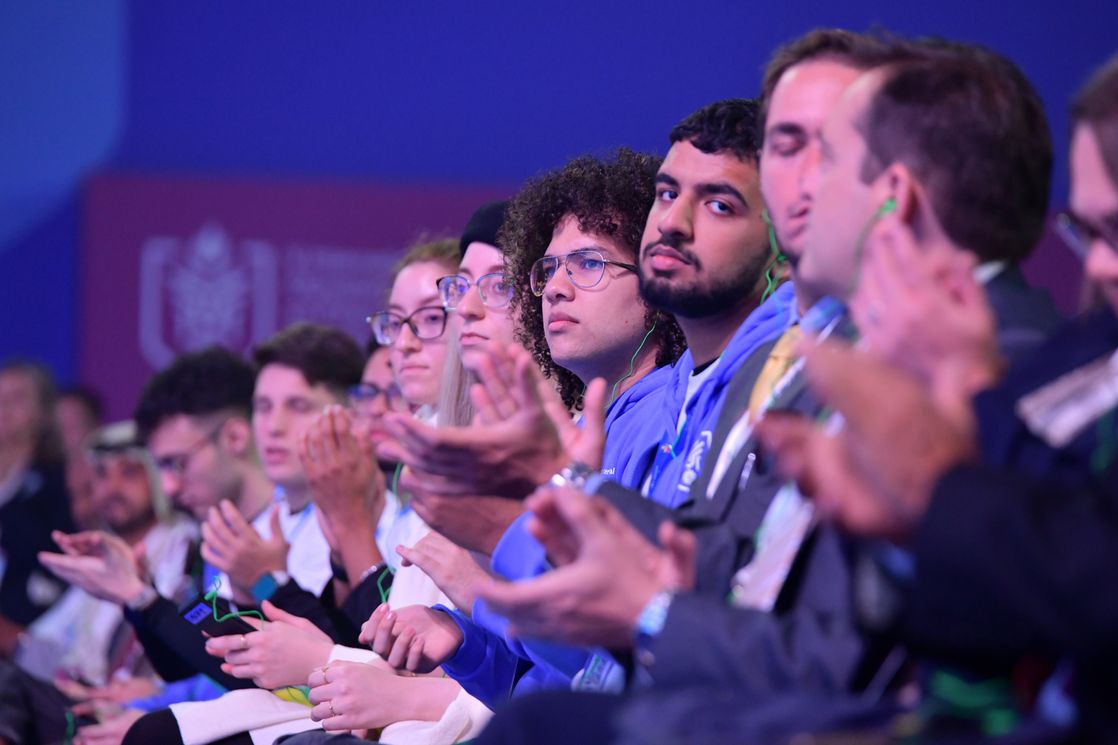
School and university students had the opportunity to attend a variety of workshops and career guidance meetings with universities. In total, about 600 finalists from 40 countries participated in the anniversary competition activities. For the first time, Bangladesh, Jordan, Madagascar, Turkey, and Uruguay took part in the Olympiad. Scientific Supervisor of the Institute of Compliance and Business Ethics of the HSE University Higher School of Law Vladislav Ponamorenko presented HSE Master's programmes in financial security to students from near and far abroad.
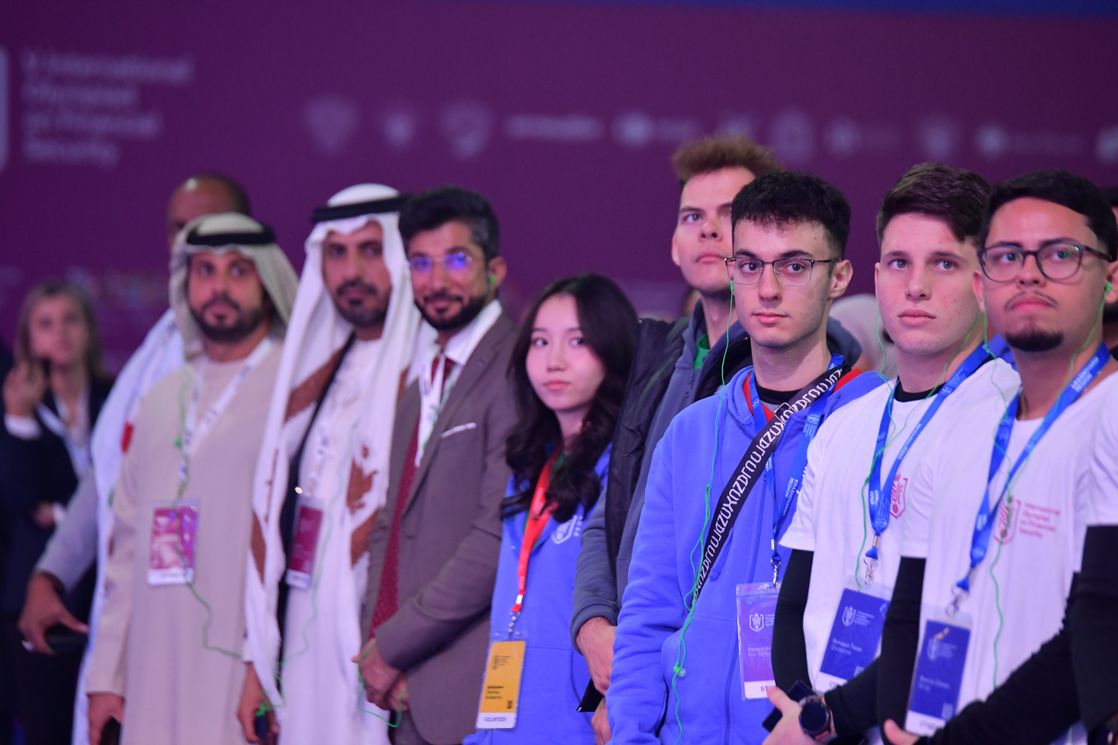
Project Head of the Project Development Centre Anton Zakharov explained the ins and outs of such programmes for Russian students. Director of Strategic Work with Applicants Alexander Chepovskiy gave an overview of HSE University to school students, noting that the competition winners have an advantage when applying for Bachelor's and Specialist's programmes.
In addition, for the duration of the finals, all students were assigned an ISI expert as a mentor. One of HSE University's groups was supervised by Tatiana Vorontsova, a senior lecturer at the School of Applied Mathematics of the HSE Tikhonov Moscow Institute of Electronics and Mathematics (MIEM).

This year, 188 participants became winners and runners-up, including Sofya Khodakova, a third-year HSE student of the Bachelor's programme ‘International Relations.’
‘After arriving here and completing the tasks, I thought it was unlikely that I’d win: many other participants had gone through a rigorous national selection process and, as it seemed, were better prepared than me. However, I prepared not only on my own, but also together with HSE University teachers. And the variety of events made me less anxious while waiting for the results, so the victory was a pleasant surprise. The competition has become my starting point: I will definitely keep honing my knowledge in financial security,’ Sofya said.

The student also shared her impressions of the final week’s activities, ‘Numerous concert events focused on Russian culture to showcase our history to foreign guests. They featured national costumes (red sarafans and shirts), songs (the famous ‘Valenki’), and Russian folk dances. Upon arrival, all participants were given not only warm clothes with the Olympiad logo but also traditional ushanka hats. As an international relations student, I was most impressed by the cultural festival, which provided an opportunity to get acquainted with other countries’ cultures and traditions, have a look at souvenirs, take pictures in national costumes, and have postcards with custom signatures in a national language.
The program also included workshops with financial experts and sporting events, such as lapta competitions, a chess tournament, and a basketball game. At the end of the Olympiad, an award ceremony was held, where winners and runners-up received computers and tablets. A final evening dance party capped off the event.’
During the closing ceremony, Head of Rosfinmonitoring Yuri Chikhanchin addressed the participants, ‘The V International Olympiad on Financial Security has come to an end today. For the first time, it was hosted in Krasnoyarsk, in the very centre of Russia. I am proud to say that each finalist is a winner in their own right. You have come a long way to get here, and you have already proven yourselves during these five days. My congratulations to the winners and runners-up. I wish every participant success and new triumphs in the future!’ It was also announced that the 2026 competition finals would be held in Krasnoyarsk again.

See also:

‘Hedgehog’ Versus ‘Relatives’: Researchers Measure How the Brain Responds to Unexpected Words During Natural Speech
Russian neurophysiologists, including researchers from HSE University, have demonstrated the feasibility of using event-related fields (ERFs) to study brain activity during natural speech perception. The researchers showed that this approach can be applied not only to individual words but also to continuous speech. Their findings indicate that words whose meanings differ significantly from the preceding context require longer processing times. The study also reveals that the brain processes function words in two stages: first, it identifies their grammatical role and then uses this information to predict the next word. The study has been published in Frontiers in Human Neuroscience.
Physicists Discover What Happens Inside a Stable Vortex
Large vortices with characteristic spiral arms are often observed in the atmosphere and the ocean. Physicists from HSE University have explained how these structures form and why they retain their shape. The researchers found that velocities at points located along the same vortex arc remain correlated even over long distances. At the same time, this correlation weakens rapidly with increasing distance from the vortex centre. These differences help explain the formation of spiral arms and may improve models of atmospheric and oceanic currents. The findings have been published in Physical Review Fluids.
‘The Peak of Stupidity’ and ‘The Valley of Despair’: HSE Economists Propose an Explanation for the Dunning–Kruger Effect
The Dunning–Kruger effect, which describes a sharp surge in self-confidence among beginners followed by an equally rapid decline as they gain experience, can be explained by the nature of the learning process and the acquisition of new knowledge. This conclusion was reached by Andrey Vorchik of the HSE Faculty of Economic Sciences together with independent researcher Murat Mamyshev. They developed a mathematical model of learning and demonstrated how subjective confidence is formed and changes as knowledge accumulates, as well as how teachers can reduce the ‘valley of despair’ experienced by learners.
Physicists at HSE University and FIAN Discover Way to 'Photograph' Sound for Testing Materials Used in 6G Communications
Researchers at HSE University, in collaboration with colleagues from the Lebedev Physical Institute of the Russian Academy of Sciences (FIAN), have developed a method for rapidly determining how firmly a film is bonded to a substrate. This is important for the creation of ultrahigh-frequency acoustic filters, which are key components of next-generation 5G and 6G communications. For the first time, researchers have succeeded in measuring the lateral rigidity of the bond between a two-dimensional material film and a substrate in this way. The study results have been published in Applied Physics Letters.
Biologists Discover Unique Properties of MiR-93-5p MicroRNA in Prostate Cancer
Researchers at the International Laboratory of Microphysiological Systems of the HSE Faculty of Biology and Biotechnology investigated how different isoforms of the same microRNA influence gene function in prostate adenocarcinoma. The study found that in some cases, microRNAs can reinforce each other’s effects by targeting and suppressing the same genes. This finding offers a fresh perspective on the molecular mechanisms underlying tumour development and on the search for disease biomarkers. The results have been published in PeerJ.
Researchers Discover How Spelling Errors Slow Down Reading in Russian
Psycholinguists from the Centre for Language and Brain at HSE University–St Petersburg have shown that words that are frequently misspelled are processed more slowly by readers, even when presented with the correct spelling. The researchers confirmed this effect for the first time using Russian-language materials and found that response speed is most strongly linked to how confidently individuals can distinguish the correct spelling of a word from an incorrect one. The study has been published in The Mental Lexicon.
HSE Economists Reveal How the Wage Gap Emerges Among Vocational School Graduates
HSE researchers examined the careers of 600,000 graduates of Russian secondary vocational education programmes and found that at the start of their careers, the gender wage gap reaches 23%, doubling after three years. This disparity is largely due to male and female students choosing different occupations when enrolling in vocational schools. These were the findings made by Sergey Roshchin, Natalya Yemelina, and Ksenia Rozhkova from of the HSE Faculty of Economic Sciences. The article has been published in Educational Studies.
HSE Researchers Make Aldehydes Perform Dual Function
Chemists from HSE University have discovered a way to carry out a reductive addition reaction without using an external reducing agent. Instead, the required 'resource' is supplied by the aldehyde itself, one of the reaction participants. This approach helps prevent unwanted side reactions, reduces toxicity, and simplifies the production and synthesis of organic molecules, including those used in the manufacture of medicines. The study has been published in Journal of Catalysis.
HSE Scientists Develop Method to Compress Large Language Models Without Losing Quality
Researchers from the AI and Digital Science Institute at the HSE Faculty of Computer Science have developed a new compression method for large language models such as GPT and LLaMA that reduces their size by 25–36% without additional training or significant loss of accuracy. This is the first approach to use mathematical transformations—specifically, rotations of model weights—to make models more amenable to compression with structured matrices. The study results have been published in ACL Findings 2025. The code is available on GitHub.
Machine Learning Models Can Help Reduce Volatility and Boost Stock Market Returns
The use of machine learning models makes it possible to achieve greater accuracy in predicting risks in the Russian stock market compared to classical econometric approaches. The predictive power of these models increases by 23%, while the average investor’s return can reach up to 13% per annum. These conclusions were drawn by Nikita Lysenok from the Department of Financial Market Infrastructure at the HSE Faculty of Economic Sciences. The paper has been published in Fundamental and Applied Mathematics.