

The Book Market, Finance and Reasons for Self-Medication: What People are Studying at the Summer School on Institutional Analysis
In the Moscow Region, the Ninth Russian Summer School on Institutional Analysis (RSSIA) was held recently, bringing together 26 young researchers from Italy, Montenegro, the Philippines, Macedonia, Great Britain, Japan, Kyrgyzstan, Kazakhstan and Russia. During the programme, they addressed problems concerning the economics of education, financial institutions, the public sector, and the theory of industrial markets.
Among the experts at the school were Sara Fisher Ellison (MIT), Alexander Teitelboim (Oxford University), Koen Schoors (Ghent University), John Nye (George Mason University and HSE) and Maria Yudkevich (HSE).
In addition, Professor Ruben Enikolopov (NES) served as a guest lecturer this year. Using the example of his research, he talked about the pitfalls people encounter during natural experiments.
Traditionally, participants in the school not only listen to lectures by leading experts in the field of institutional economics, but they also present their own research projects, as well as share experiences with other participants and experts.
‘The main goal of the school is to give participants maximum feedback on what they are currently doing’, says Elena Podkolzina, one of the school’s organizers. ‘In the morning, the experts talk about the areas they are involved in, and the second half of the day is devoted completely to discussion of participants' projects. On the first day, the participants had three minutes to talk about the main idea of their projects. After each short presentation, the other participants and experts shared their comments for 10 minutes. Those giving the presentation could not immediately respond to comments but instead had wait until their final ten-minute presentation on one of the last days; this presentation incorporates the advice received both during the initial presentation and in advisory sessions with experts. Most of the students in the school are graduate students who plan to enter PhD programmes or who are already studying in them, as well as those who recently secured post-doc positions. The opportunity to receive advice from renowned academics on how to improve research, how to better apply various techniques, which publications to read, who to ask for help, or which journal is the best for submitting an article – these are all topics that we offer, which we hope will benefit our students’.
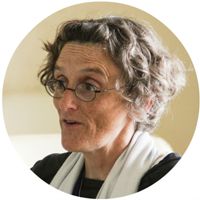
Sara Ellison, Massachusetts Institute of Technology
My current research is on the used book market and how that has changed quite dramatically from when used books used to be purchased in small brick and mortar stores, to now, when most of the transactions on used books in the United States happen online, and searching for used books is much easier because of the online technology.
I was happy to receive the invitation to come teach here, and it’s been wonderful so far. The thing that I think is most fun about a setting like this is that the students all have very diverse interests.
One particular difference I’ve noticed is that a lot of students here are doing research project using data from HSE. It’s wonderful that HSE is willing to collect these data and provide them to the students; this opens a lot of different research opportunities. That’s not as common in the U.S. If one of my students wanted to use detailed data from MIT, I think they would have to go through a lot of bureaucratic hoops to get access to those data.

Koen Schoors, Ghent University
I came here because I’m very interested in Russia and I like to work with young scholars. By being one of the teachers, you can improve their projects, give them ideas and see how these people get to know each other, how they create networks, how they work hard on the projects, but also have fun in the evenings – it’s a great experience. It’s useful for the students, because they are exposed to the international faculty and this faculty criticize them very hard, but also help them to improve the work. That is exactly the attitude you need in academic research: you need to deal with criticism, but also listen to advice and improve your work.
This year, I’m going to teach about financial markets and networks and how financial networks of banks, for example, can lead to contagion. The second thing I’m going to discuss is a very important topic around the world – the link between politics and banking.
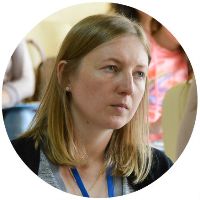
Olga Ukhaneva, Georgetown University
I just graduated from Georgetown University, where I got my PhD degree in Economics, and now I’m doing my post-doc at the McDonough School of Business. I heard about this school many times, and then a friend of mine recommended me to come here right before the workshops started.
I'm starting a new study on the impact of the internet on people's health, and I would be interested in receiving comments about it. We have good data on the U.S.; we see how people use the internet to find information about different diseases, how many times they went to a doctor or called an ambulance, whether they had surgery, and more.

Jason Alinsunurin, De La Salle University
I joined RSSIA because I am writing my PhD dissertation research proposal and hope I can get my paper published and get into a good PhD programme.
Maria Yudkevich gave a lecture on peer effects, which was very interesting. I think I can apply the model that she used, for example, in different organizations. Although her paper was on peer effects in education, I was thinking of doing research on groups of faculty members. I think that would be very useful.
At the end of the school, I will have a very good idea of what the top researchers are doing in their field. I think that is very important for young researchers like me.
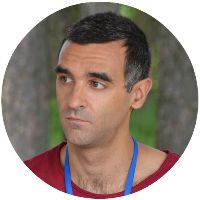
Nicolo Ponterollo, University of Verona
I’m a regional economist; my field of interest is the development of the European Union. The European Union spends a lot of money in order to improve the less developed regions. However, the absorption of these finances depends on the institutional level of these regions. I’m here to try to understand the aspects of this topic and to understand the role of institutions with respect to development.
It’s also interesting to visit a new place – Russia and Moscow are new for me. It’s a stimulating country that’s very different from Italy.
As for my expectations, I think this summer school is useful for expanding my views and my horizons. Until now, I concentrated strictly on regional development, touching some arguments like the institutional level, but not going into the topic deeply.
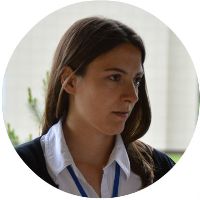
Jasna Zarkovic, Montenegro, Erasmus Mundus Master’s Programme
I want to see how strategic planning of local economic development is going in Montenegro. Experience in strategic planning here is in a rather early stage, so I want to see how municipalities are doing it and what their experience is in preparing strategic plans.
I can learn a lot here, especially how to present the research that we are doing and to make it better. Yesterday, we received very honest comments on our research, and I think that’s really good. We learned how to present our research, to be stronger, and to direct our message in the right way.

Maria Kristina Alinsunurin, University of the Philippines Los Baños
I’m actively searching for PhD opportunities, and I think the summer school is a good venue for this. My research is on financial inclusion, which is to expand access to financial services, especially to low-income homes. It’s a pressing problem in the Philippines and not much research has been done yet. My research is about microfinance; however, financial inclusion is more than just microfinance – it’s basically the full range of financial services.
See also:

‘A Laboratory at 3,000 Metres’: HSE University–St Petersburg to Start Call for First Summer School in Himalayas
HSE University–St Petersburg has announced the call for the Summer School in the Himalayas, which will take place from June 30 to July 13, 2025. The Summer School is the follow-up to two expeditions in the Himalayas organised by the St Petersburg School of Social Sciences in 2024. The programme allows bachelor's, master's, and PhD students to immerse themselves in research on climate change and sustainability in local communities in the unique natural laboratory of the Himalayan region.
From Sequencing to Constructing a Cardio Panel: Summer School in Cardiogenetics
From August 19 to 29, the Continuing Professional Development Centre of the HSE Faculty of Computer Science hosted the summer school 'Cardiogenetics: From Sequencing to Constructing a Cardio Panel,' organised in collaboration with the Russian Academy of Sciences' Institute of Analytical Instrumentation (IAI) and Institute of Spectroscopy (ISAN), and the Syntol company. The summer school was conducted within the framework of the Federal Research Programme for Genetic Technologies Development for 2019–2027 (Project 15.IP.21.0004).
'These Are Unforgettable Impressions, I Will Cherish Them Forever'
HSE St Petersburg International Summer School is in full swing—right now, international students from 12 countries are attending lectures and enjoying the cultural programme. The HSE News Service talked to the participants about their most vivid impressions.
HSE University-St Petersburg Hosts Students from 12 Countries at the International Summer School
On July 10, HSE University-St Petersburg launched the International Summer School—a series of classes for students from India, Vietnam, the Republic of Korea and other countries. Foreign guests are getting to know the university, attending lectures in six fields of study, and enjoying an inspiring cultural programme.
The XI Russian-Chinese Summer School on International Relations Kicks Off at HSE University
On July 1, 2024, the opening ceremony of the XI International Russian-Chinese Summer School on International Relations, titled ‘Partnership and Cooperation in the New World Order,’ took place. The event was organised by the HSE Faculty of World Economy and International Affairs in collaboration with HSE Centre for Comprehensive European and International Studies (CCEIS). Graduate and postgraduate students from various countries have come to Moscow to study international relations and collectively envision a new world order.
HSE University Holds 10th Summer School ‘Eye-tracking in the Lab and Beyond’
This year, more than 100 students from Russia and abroad took part in the 10th summer neurolinguistic school, ‘Eye-tracking in the Lab and Beyond’. The school is held annually by the HSE Center for Language and Brain. Leading experts spoke about advanced developments and research in the field of video-oculography.
Data Analysis and Personalised Medicine: Summer School in Cardiogenetics
The Continuing Professional Development Centre of the HSE Faculty of Computer Science has recently hosted the summer school 'Cardiogenetics: From Sequencing to Constructing a Cardio Panel'. The school programme was co-organised by the Russian Academy of Sciences' Institute of Analytical Instrumentation and Institute of Spectroscopy and the Syntol company.
‘Interest in the Application of Machine Learning in Bioinformatics Is Growing by the Year’
On August 28–30, HSE University’s Faculty of Computer Science held the 4th Summer School on Machine Learning in Bioinformatics. This year, 670 people registered for the event, and over 300 visited in person. The programme included lectures and seminars on various spheres of bioinformatics: applied bioinformatics and the bioinformatics of DNA, RNA, and proteins; elementary genomics; modern methods of data analysis and molecular biology. The lectures were complemented by practical tasks aimed at different levels of knowledge.
HSE Faculty of Computer Science Holds Summer School on Software Engineering
At the beginning of July, a summer school on software engineering was held at the HSE Faculty of Computer Science. This is the successor to the school on mobile applications development, which was held at the FCS from 2015 to 2022. The school’s partners for this event included 1C, Sber, the community of authors of the Indicator games, and the Samsung Innovation Campus IT School.
‘This Summer School Made Me Realise How Important Data Analytics Actually Is Nowadays’
From July 4–8, the 14th Summer School ‘Methods and Tools for Analysing Social Networks’ was held by the International Laboratory for Applied Network Research (ANR Lab). The dissemination of knowledge about the most recent methods of network analysis is one of the goals of the laboratory. Social network analysis is an interdisciplinary field that studies networks of interactions between different objects (such as people, organisations, institutions, countries, words in texts, texts on the internet) and identifying hidden patterns within them.