

HSE Researchers Prove the Existence of Nash Equilibrium for a New Class of Problems in Game Theory
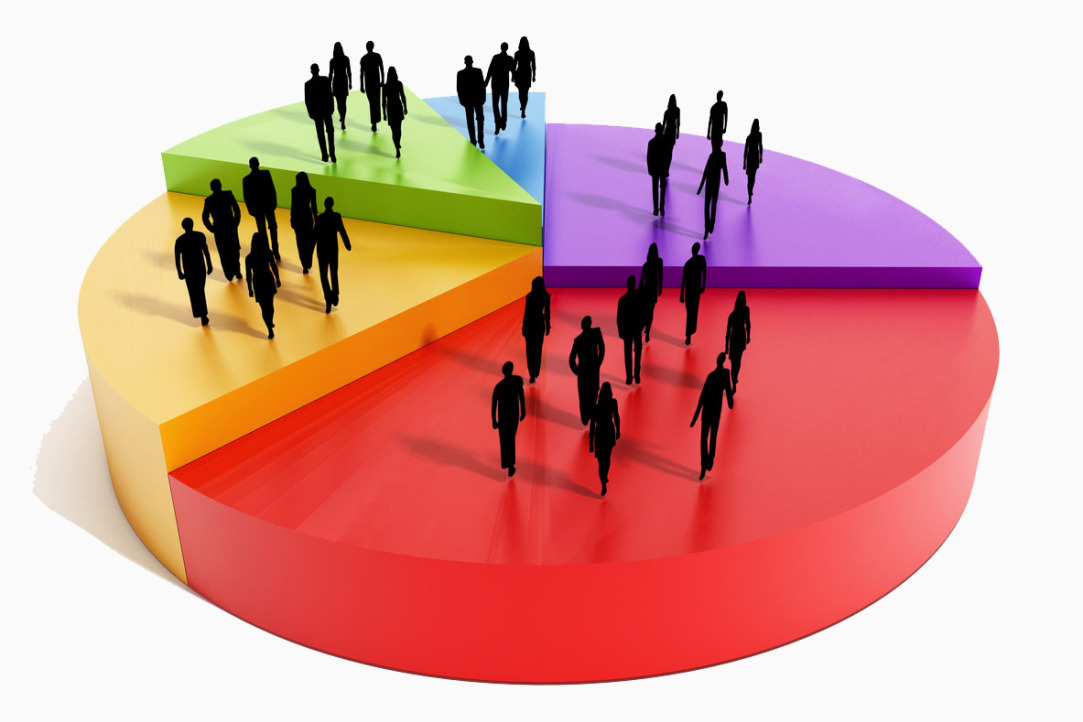
Researchers at HSE University's St Petersburg School of Economics and Management have been exploring methods for the efficient allocation of resources in systems involving multiple players. The scientists have proven the existence of strategies for optimal decision-making in competition for limited, discrete resources in four different cases. The developed mathematical model can be applied in various fields, ranging from education and medicine to managing networks and computing power. The paper has been published in Games and Economic Behaviour.
There is ongoing competition for various resources in the world, and individuals must choose the optimal strategy to acquire them. Prospective students must choose which school to apply to, companies compete for the best projects, and gym-goers rush to claim an available machine.
Scientists strive to find methods that help systems with many participants operate efficiently, avoiding overloads and the irrational use of resources. These problems can be translated into a mathematical model where agents make decisions based on potential benefits, available resources, and their capabilities. In game theory, such models are analysed through the lens of Nash equilibrium—a state where no participant wishes to change their choice, as doing so would not lead to increased benefits.
Researchers at HSE University's St Petersburg School of Economics and Management have proven the existence of Nash equilibrium in certain types of games involving indivisible (ie discrete) resources, such as airplane seats, apartments, library books, or school placements. These resources are considered discrete because they cannot be divided—for instance, you cannot take half a window seat and half an aisle seat on a plane.
To demonstrate the existence of Nash equilibrium, the researchers developed a mathematical model in which each participant (agent) selects one of the available resources. Participants aim to gain the greatest benefit and maximise their share of the resource. This creates a system where an agent's choice is influenced not only by the resource itself, but also by the number of other participants selecting the same resource.
In the model, each participant is assigned a certain weight, which plays a significant role. For example, when prospective students select a school, they consider factors such as the quality of the educational programme, the school's accessibility, its reputation, and more. They assess the value of the resource and their ability to acquire it. Weight represents the agent's own capabilities in relation to a specific resource.
The researchers proved that a Nash equilibrium, beneficial for all agents, exists in four cases. The first case occurs when the agent's weight is independent of the resource, while the values of the resources vary. For example, when an applicant with the highest USE score chooses from several schools with varying rankings.
In the second case, the agent's weight depends on the resource, but the values of all resources are the same, eg an applicant wins an internal olympiad at a top school and gains priority for admission.
In the third case, an agent's weight depends on the resource, the values of the resources vary, but there are only two resources: eg an applicant can easily enrol in a lesser-known school by winning an internal olympiad, or they can compete for a spot at a prestigious school on equal terms with others.
The fourth case is special. If the number of participants in the system is large—more than 20 agents—the system tends to approach equilibrium but does not fully reach it. This is an asymptotic result that accurately reflects reality. In such cases, each participant acts nearly optimally. Even if the strategy is changed, the situation cannot be significantly improved.

Vasily Gusev
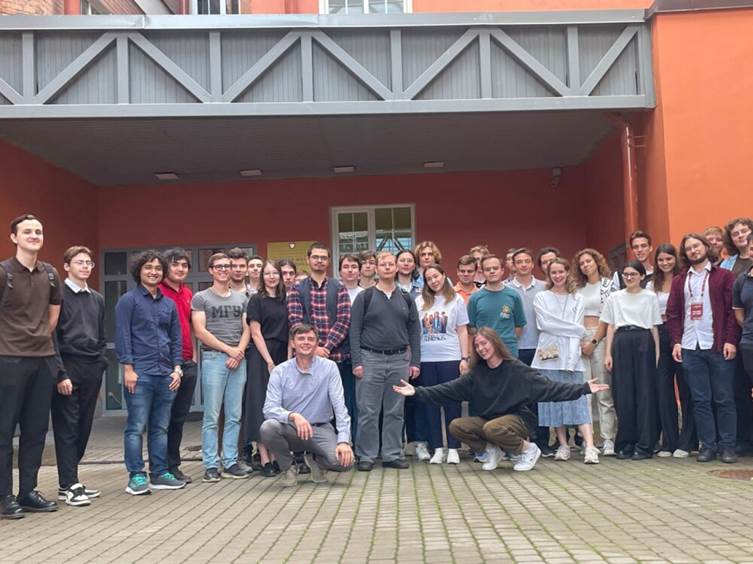
'We did not immediately find a proof for the fourth case; it was suggested by a student participating in an internship programme run by our laboratory. His name is Mikhail Reshetov, and he became our co-author,' says Vasily Gusev, Senior Research Fellow at the International Laboratory of Game Theory and Decision Making at HSE Campus in St Petersburg and co-author of the paper.
According to the researchers, the developed mathematical model opens up opportunities for improving resource allocation systems across various fields, from education and medicine to the distribution of computing power and management of large networks.

Alexander Nesterov
'We have shown that competition for resources does not lead to chaos, but instead stabilises without external interference. We have mathematically proven that if agents are given the freedom of choice, each will find a profitable outcome for themselves,' comments Alexander Nesterov, Head of the International Laboratory of Game Theory and Decision Making at HSE Campus in St Petersburg and co-author of the paper.
See also:

Scientists Test Asymmetry Between Matter and Antimatter
An international team, including scientists from HSE University, has collected and analysed data from dozens of experiments on charm mixing—the process in which an unstable charm meson oscillates between its particle and antiparticle states. These oscillations were observed only four times per thousand decays, fully consistent with the predictions of the Standard Model. This indicates that no signs of new physics have yet been detected in these processes, and if unknown particles do exist, they are likely too heavy to be observed with current equipment. The paper has been published in Physical Review D.
HSE Scientists Reveal What Drives Public Trust in Science
Researchers at HSE ISSEK have analysed the level of trust in scientific knowledge in Russian society and the factors shaping attitudes and perceptions. It was found that trust in science depends more on everyday experience, social expectations, and the perceived promises of science than on objective knowledge. The article has been published in Universe of Russia.
Scientists Uncover Why Consumers Are Reluctant to Pay for Sugar-Free Products
Researchers at the HSE Institute for Cognitive Neuroscience have investigated how 'sugar-free' labelling affects consumers’ willingness to pay for such products. It was found that the label has little impact on the products’ appeal due to a trade-off between sweetness and healthiness: on the one hand, the label can deter consumers by implying an inferior taste, while on the other, it signals potential health benefits. The study findings have been published in Frontiers in Nutrition.
HSE Psycholinguists Launch Digital Tool to Spot Dyslexia in Children
Specialists from HSE University's Centre for Language and Brain have introduced LexiMetr, a new digital tool for diagnosing dyslexia in primary school students. This is the first standardised application in Russia that enables fast and reliable assessment of children’s reading skills to identify dyslexia or the risk of developing it. The application is available on the RuStore platform and runs on Android tablets.
Physicists Propose New Mechanism to Enhance Superconductivity with 'Quantum Glue'
A team of researchers, including scientists from HSE MIEM, has demonstrated that defects in a material can enhance, rather than hinder, superconductivity. This occurs through interaction between defective and cleaner regions, which creates a 'quantum glue'—a uniform component that binds distinct superconducting regions into a single network. Calculations confirm that this mechanism could aid in developing superconductors that operate at higher temperatures. The study has been published in Communications Physics.
Neural Network Trained to Predict Crises in Russian Stock Market
Economists from HSE University have developed a neural network model that can predict the onset of a short-term stock market crisis with over 83% accuracy, one day in advance. The model performs well even on complex, imbalanced data and incorporates not only economic indicators but also investor sentiment. The paper by Tamara Teplova, Maksim Fayzulin, and Aleksei Kurkin from the Centre for Financial Research and Data Analytics at the HSE Faculty of Economic Sciences has been published in Socio-Economic Planning Sciences.
Larger Groups of Students Use AI More Effectively in Learning
Researchers at the Institute of Education and the Faculty of Economic Sciences at HSE University have studied what factors determine the success of student group projects when they are completed with the help of artificial intelligence (AI). Their findings suggest that, in addition to the knowledge level of the team members, the size of the group also plays a significant role—the larger it is, the more efficient the process becomes. The study was published in Innovations in Education and Teaching International.
New Models for Studying Diseases: From Petri Dishes to Organs-on-a-Chip
Biologists from HSE University, in collaboration with researchers from the Kulakov National Medical Research Centre for Obstetrics, Gynecology, and Perinatology, have used advanced microfluidic technologies to study preeclampsia—one of the most dangerous pregnancy complications, posing serious risks to the life and health of both mother and child. In a paper published in BioChip Journal, the researchers review modern cellular models—including advanced placenta-on-a-chip technologies—that offer deeper insights into the mechanisms of the disorder and support the development of effective treatments.
Using Two Cryptocurrencies Enhances Volatility Forecasting
Researchers from the HSE Faculty of Economic Sciences have found that Bitcoin price volatility can be effectively predicted using Ethereum, the second-most popular cryptocurrency. Incorporating Ethereum into a predictive model reduces the forecast error to 23%, outperforming neural networks and other complex algorithms. The article has been published in Applied Econometrics.
Administrative Staff Are Crucial to University Efficiency—But Only in Teaching-Oriented Institutions
An international team of researchers, including scholars from HSE University, has analysed how the number of non-academic staff affects a university’s performance. The study found that the outcome depends on the institution’s profile: in research universities, the share of administrative and support staff has no effect on efficiency, whereas in teaching-oriented universities, there is a positive correlation. The findings have been published in Applied Economics.