

Hi-Tech Grief: HSE Researchers Explore the Pros and Cons of Digital Commemoration

Researchers at HSE University in Nizhny Novgorod have explored how technological advancements are transforming the ways in which people preserve the memory of the deceased and significant events. Digital technologies enable the creation of virtual memorials, the preservation of personal stories and belongings of the deceased, interaction with their digital footprint, and even the development of interactive avatars based on their online activity. However, these technologies not only evoke nostalgia and provide a sense of relief but can also heighten anxiety and fear, and delay the process of accepting loss. The study has been published in Chelovek (The Human Being).
The desire to commemorate significant people, events, and traditions has existed throughout human history. Architecture, religious rituals, family legends, and genealogical records are all examples of how we strive to preserve memory. This desire becomes especially significant when people confront the finiteness of life. Anxiety, fear, and grief drive us to ensure that we leave a mark, enabling others to reconstruct the images of those who are no longer around.
Historically, people have preserved the memory of the departed through texts such as obituaries, diaries, or vital records. Today, technology provides far more possibilities, including multimodal formats such as photos, videos, and audio, as well as virtual cemeteries, online memorial platforms, and even digital replicas of the deceased.

'We are at a fascinating juncture where one of the oldest rituals in human culture—funeral rites—is undergoing change. The shift from analogue to digital memory is shaping new approaches to commemoration. Thousands of people tune in to watch live broadcasts of the funerals of active internet users,' notes Timur Khusyainov, Deputy Dean of the Faculty of Humanities at the HSE Campus in Nizhny Novgorod.
According to the researchers, this transition to virtual space makes the topic of death less taboo and significantly broadens the number of mourners. New forms of grieving are emerging on social media, including virtual funerals, memorial posts, and the creation of online communities to honour the deceased, whose personal pages transform into memorial sites. According to some estimates, by 2060, Facebook (a banned organisation in the Russian Federation) may have more pages of deceased users than of living ones. However, this publicity alters the perception of death itself: once in the digital space, it becomes ubiquitous, commonplace, and loses its individual significance, distancing itself from the lived experience.
The deceased begin to exist in virtual space, continuing to 'live' through their digital footprints—not only the content they consciously created but also a vast array of other interactions, such as fitness tracker data, search history, and even the log of connections to a router.
The authors emphasise how the digitalisation of death is increasingly featured in popular culture. Films and television series, such as Black Mirror and Cybervillage (Кибердеревня), explore how digital technologies influence the memory of the departed and their role in modern life. This illustrates how much society cares about the topic and seeks to incorporate related developments into the context of daily life, bridging the possible and the real.
The collection and handling of digital footprints have also become an issue. After a person's death, their data—including correspondence, photos, social media posts, and device information—remains in the digital space. This raises a variety of ethical and legal concerns. For example, the EU General Data Protection Regulation (GDPR) protects the personal data of deceased individuals for 30 years after their death, but this regulation is fragmented. Legislation has been enacted in the USA to regulate access to digital heritage through online wills and powers of attorney.
Despite these measures, the issue persists. In some cases, platforms have become de facto owners of the data, allowing them to handle digital footprints at their discretion. This can result in information leakage, manipulation, and the creation of digital avatars without the consent of relatives or the will of the deceased. AI-powered chatbots enable the creation of digital avatars of deceased individuals, which, based on vast amounts of data, can virtually 'revive' a person, recreating their voice, speech patterns, and even habits.
According to the researchers, digital avatars of the deceased can be likened to the monster brought to life by Dr Frankenstein: an image constructed from digital footprints and artificially animated in virtual space. On one hand, it is powerful and human-like, but upon closer inspection, its flaws become apparent—errors occur when generating images, and language models often produce false information.
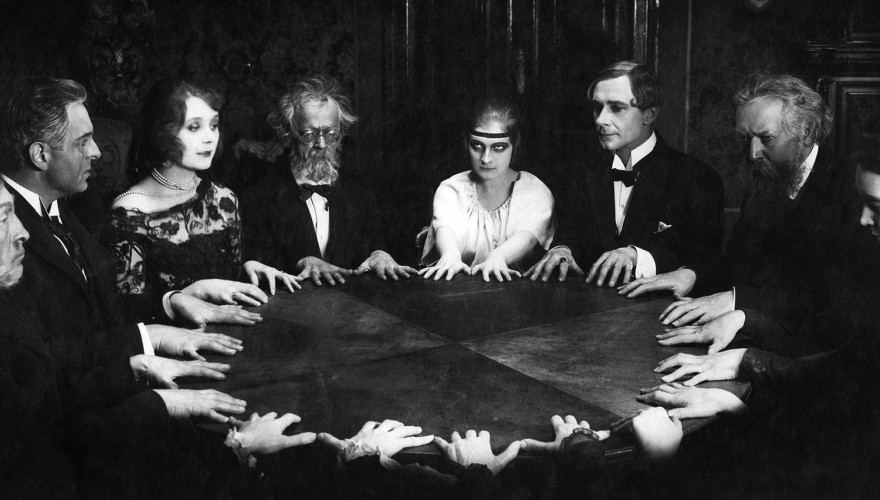
'A machine can be imbued with otherworldly qualities, giving rise to the myth of resurrection and immortality. Technologies serve as modern-day “spirit mediums,” similar to those used in Victorian-era séances, allowing us to interact with those "risen from the dead," whose number is growing,' Khusyainov notes.

'An important aspect of digital "resurrection" is its impact on the emotional experience of the living in relation to death and dying. On one hand, interacting with digital footprints helps people in their grieving process by fostering a sense of continued connection with the deceased. On the other hand, technologies can also hinder the process of accepting loss. Instead of confronting the finiteness of life, a person becomes immersed in the illusion of communicating with a digital "doppelgänger," which increases anxiety and the risk of retraumatisation,’ explains Ekaterina Urusova, co-author of the article, visiting lecturer at the HSE Campus in Nizhny Novgorod, and existential-humanistic psychotherapist.
Ekaterina Urusova
See also:

Scientists Test Asymmetry Between Matter and Antimatter
An international team, including scientists from HSE University, has collected and analysed data from dozens of experiments on charm mixing—the process in which an unstable charm meson oscillates between its particle and antiparticle states. These oscillations were observed only four times per thousand decays, fully consistent with the predictions of the Standard Model. This indicates that no signs of new physics have yet been detected in these processes, and if unknown particles do exist, they are likely too heavy to be observed with current equipment. The paper has been published in Physical Review D.
HSE Scientists Reveal What Drives Public Trust in Science
Researchers at HSE ISSEK have analysed the level of trust in scientific knowledge in Russian society and the factors shaping attitudes and perceptions. It was found that trust in science depends more on everyday experience, social expectations, and the perceived promises of science than on objective knowledge. The article has been published in Universe of Russia.
Scientists Uncover Why Consumers Are Reluctant to Pay for Sugar-Free Products
Researchers at the HSE Institute for Cognitive Neuroscience have investigated how 'sugar-free' labelling affects consumers’ willingness to pay for such products. It was found that the label has little impact on the products’ appeal due to a trade-off between sweetness and healthiness: on the one hand, the label can deter consumers by implying an inferior taste, while on the other, it signals potential health benefits. The study findings have been published in Frontiers in Nutrition.
HSE Psycholinguists Launch Digital Tool to Spot Dyslexia in Children
Specialists from HSE University's Centre for Language and Brain have introduced LexiMetr, a new digital tool for diagnosing dyslexia in primary school students. This is the first standardised application in Russia that enables fast and reliable assessment of children’s reading skills to identify dyslexia or the risk of developing it. The application is available on the RuStore platform and runs on Android tablets.
Physicists Propose New Mechanism to Enhance Superconductivity with 'Quantum Glue'
A team of researchers, including scientists from HSE MIEM, has demonstrated that defects in a material can enhance, rather than hinder, superconductivity. This occurs through interaction between defective and cleaner regions, which creates a 'quantum glue'—a uniform component that binds distinct superconducting regions into a single network. Calculations confirm that this mechanism could aid in developing superconductors that operate at higher temperatures. The study has been published in Communications Physics.
Neural Network Trained to Predict Crises in Russian Stock Market
Economists from HSE University have developed a neural network model that can predict the onset of a short-term stock market crisis with over 83% accuracy, one day in advance. The model performs well even on complex, imbalanced data and incorporates not only economic indicators but also investor sentiment. The paper by Tamara Teplova, Maksim Fayzulin, and Aleksei Kurkin from the Centre for Financial Research and Data Analytics at the HSE Faculty of Economic Sciences has been published in Socio-Economic Planning Sciences.
Larger Groups of Students Use AI More Effectively in Learning
Researchers at the Institute of Education and the Faculty of Economic Sciences at HSE University have studied what factors determine the success of student group projects when they are completed with the help of artificial intelligence (AI). Their findings suggest that, in addition to the knowledge level of the team members, the size of the group also plays a significant role—the larger it is, the more efficient the process becomes. The study was published in Innovations in Education and Teaching International.
New Models for Studying Diseases: From Petri Dishes to Organs-on-a-Chip
Biologists from HSE University, in collaboration with researchers from the Kulakov National Medical Research Centre for Obstetrics, Gynecology, and Perinatology, have used advanced microfluidic technologies to study preeclampsia—one of the most dangerous pregnancy complications, posing serious risks to the life and health of both mother and child. In a paper published in BioChip Journal, the researchers review modern cellular models—including advanced placenta-on-a-chip technologies—that offer deeper insights into the mechanisms of the disorder and support the development of effective treatments.
Using Two Cryptocurrencies Enhances Volatility Forecasting
Researchers from the HSE Faculty of Economic Sciences have found that Bitcoin price volatility can be effectively predicted using Ethereum, the second-most popular cryptocurrency. Incorporating Ethereum into a predictive model reduces the forecast error to 23%, outperforming neural networks and other complex algorithms. The article has been published in Applied Econometrics.
Administrative Staff Are Crucial to University Efficiency—But Only in Teaching-Oriented Institutions
An international team of researchers, including scholars from HSE University, has analysed how the number of non-academic staff affects a university’s performance. The study found that the outcome depends on the institution’s profile: in research universities, the share of administrative and support staff has no effect on efficiency, whereas in teaching-oriented universities, there is a positive correlation. The findings have been published in Applied Economics.