

‘The Goal of Modern Geography Is To Digitise Expert Knowledge and Integrate It with Big Data’


-min.jpg)

The importance of geographical science is increasing, as is the demand for education in this field. Since 2020, application numbers for Bachelor’s programmes at HSE University’s Faculty of Geography and Geoinformation Technology have climbed by 30%, while interest in Master’s programmes has also expanded, with applications up 10–15%. Nikolay Kurichev, Dean of the Faculty, spoke about this at a press conference hosted by MIA Rossiya Segodnya.
On August 15, 2025, a press conference on ‘The Geography of the New Generation: Strategic Prospects’ was held at the MIA Rossiya Segodnya press centre. The event was timed to coincide with Geographers’ Day, a professional holiday celebrated in Russia on August 18.
The event was attended by Nikolay Kasimov, First Vice-President of the Russian Geographical Society, President of the Geography Faculty at Lomonosov Moscow State University, and academician of the Russian Academy of Sciences, Olga Solomina, Director of the Institute of Geography of the Russian Academy of Sciences, Head of the Joint Department at the Faculty of Geography and Geoinformation Technology of HSE University and corresponding member of the Russian Academy of Sciences, and Nikolay Kurichev, Dean of the Faculty of Geography and Geoinformation Technology at HSE University. The participants discussed how modern geography is being transformed, and what challenges and opportunities the industry is facing in the context of digitalisation, the development of artificial intelligence, and climate change.
Nikolay Kasimov welcomed the audience and congratulated his colleagues on Geographers’ Day. He emphasised the significance of this holiday for the global community and discussed the environmental challenges of geography, particularly urban pollution.

President of the Geography Faculty at Lomonosov Moscow State University
‘The most important thing to solve environmental problems is measurement, more measurement, and even more measurement. We need to delve deeper into the microcosm to accurately identify pollutants and their range.’
He also referred to statistics from studies on road dust in Moscow, which is one of the major sources of pollution, especially in spring.
Olga Solomina discussed modern research tools such as remote sensing, mathematical modelling, and big data analysis.

Academic Supervisor of the Faculty of Geography and Geoinformation Technology
‘Today, cartography has evolved beyond simply being a map on paper. Now it includes the use of streaming data, three-dimensional images, as well as highly detailed and accurate measurements of objects in motion and space. These new technologies distinguish modern geography from the past. Nowadays, we have access to new tools like space imagery, drones, thermal imagers, and multispectral imaging to aid in studying our natural and social environments.’
Olga Solomina noted that climate change is one of the main challenges for modern geographers. She paid special attention to the study of glaciers, which are rapidly shrinking, as well as the effects of melting permafrost on the landscape transformation.
Nikolay Kurichev, in his speech, emphasised the practical significance of geographical science and its role in addressing pressing issues. Dean of HSE University’s Faculty of Geography discussed topics such as assessing natural and climate risks, selecting effective adaptation measures, developing digital solutions for environmental and climate projects, and managing territories using big data. All of these areas of research are conducted at HSE University’s Faculty of Geography and Geoinformation Technology.
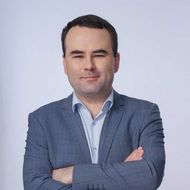
Dean of the Faculty of Geography and Geoinformation Technology
‘There has been a revolution in the field of remote sensing worldwide. Using remote sensing technologies, we can create tools for automatic data analysis and geoanalytics, allowing us to make informed decisions. However, such decisions cannot be based solely on technical grounds—profound expertise is essential. The goal of modern geography is to translate this expert knowledge into a digital format and integrate it with big data through AI-powered geographic tools. Such solutions are essential for businesses, governments, and society as a whole.’
Nikolay Kurichev shared the success of HSE University’s Faculty of Geography in its 2025 admission campaign. Interest in the discipline grew significantly, with applications to the Bachelor’s programme rising by 30% and the passing score jumping by 20 points compared to previous years. As for the Master’s programme, the number of applications for the ‘Low Carbon Development’ and ‘Spatial Data and Applied Geoanalytics’ programmes also experienced growth, with application numbers up by 10–15%.

See also:

Researchers Develop Method for Direct Generation of Regulatory DNA
Researchers at HSE University have developed a model for generating promoters and enhancers—DNA sequences that regulate gene activity. The model works directly with DNA nucleotides, without first transforming them into a continuous numerical representation. This solution could be useful for applications in synthetic biology and gene therapy. The study results were presented at the ICLR 2026 Workshop ‘Generative AI in Genomics (Gen^2): Barriers and Frontiers.’
‘We Should Redesign Geography Education to Take Account of Big Data and AI’
The classical model of geographical education that emerged in the 20th century, primarily to study, assess, and develop territories and natural resources, is no longer suited to the complexity of modern spatial systems. Geographers need to learn how to work with big data and GeoAI, model nonlinear changes, and make decisions under conditions of uncertainty, while also bringing together knowledge of natural and socio-economic processes.Nikolay Kurichev, Dean of the HSE Faculty of Geography and Geoinformation Technology, said this on August 18 at the international scientific session ‘BRICS Geographers Day.’
Researchers at HSE University and Sber Train Neural Networks to Better Predict User Preferences
The HSE FCS AI and Digital Science Institute and Sber have introduced a new architecture for recommendation systems that combines two classes of models, enabling algorithms to better predict users’ interests and needs. A preprint of the paper has been published on arxiv.org and presented at Urban ML.
Physicists Discover What Happens Inside a Stable Vortex
Large vortices with characteristic spiral arms are often observed in the atmosphere and the ocean. Physicists from HSE University have explained how these structures form and why they retain their shape. The researchers found that velocities at points located along the same vortex arc remain correlated even over long distances. At the same time, this correlation weakens rapidly with increasing distance from the vortex centre. These differences help explain the formation of spiral arms and may improve models of atmospheric and oceanic currents. The findings have been published in Physical Review Fluids.
HSE Computer Science Researchers Win Gold Medal at International Machine Learning Competition
A team comprising HSE International Laboratory of Statistical and Computational Genomics researchers Aleksei Shmelev and Nikita Chervov, 2025 graduate of the HSE Faculty of Computer Science’s Master’s programme in Data Analysis in Biology and Medicine Ivan Gevorkov, and two students from the United States achieved an outstanding result at the 2026 NeuroGolf international machine learning championship. The team won a gold medal and placed seventh overall.
‘Working with AI Solves a Wide Range of Engineering Problems’
Artificial intelligence is a working tool based on a balanced combination of algorithms and engineering. Experts and doctoral students from the HSE Moscow Institute of Electronics and Mathematics explain how AI technologies can improve an application, device, or system, and what engineering tasks are solved in the process.
‘The Peak of Stupidity’ and ‘The Valley of Despair’: HSE Economists Propose an Explanation for the Dunning–Kruger Effect
The Dunning–Kruger effect, which describes a sharp surge in self-confidence among beginners followed by an equally rapid decline as they gain experience, can be explained by the nature of the learning process and the acquisition of new knowledge. This conclusion was reached by Andrey Vorchik of the HSE Faculty of Economic Sciences together with independent researcher Murat Mamyshev. They developed a mathematical model of learning and demonstrated how subjective confidence is formed and changes as knowledge accumulates, as well as how teachers can reduce the ‘valley of despair’ experienced by learners.
Advancing Collaboration: HSE Faculty of Computer Science and Harbin Institute of Technology Hold Joint Seminar
From July 13 to 16, 2026, the Faculty of Computer Science hosted the Russian–Sino Research Seminar on Machine Learning Applications, organised by the HSE Laboratory for Cloud and Mobile Technologies in partnership with the Harbin Institute of Technology (China). A delegation comprising seven students and three university representatives travelled to Moscow to take part in an intensive four-day programme.
A New Section on AI and a Prizewinning Paper: Early-Career HSE Researchers Take Part in IEEE EDM Conference
The 27th IEEE International Conference of Young Professionals in Electron Devices and Materials (EDM) has taken place in the Altai Republic. This year, researchers from HSE University presented the results of their research and were involved in organising a new section on artificial intelligence. A paper by HSE master’s student Rodion Sidorenko was awarded third place in the research paper competition at the conference.
HSE Initiates Development of Ethical Standard for Anthropomorphic Robots
Beyond technological solutions, the development of anthropomorphic robotics also demands ethical ones. In July 2026, the HSE Institute for Robotics Systems hosted a foresight session dedicated to developing an Ethical Standard for Anthropomorphic Robotic Complexes. Representatives from businesses, government bodies, scientific organisations, and universities gathered to discuss key ethical and legal issues surrounding the development of anthropomorphic robotic complexes. The main outcome of the meeting was a draft of the Ethical Standard.